SegWit
SegWit stands for Segregated Witness. It is a method that stores the signature portion of a transaction separately from the rest of the transaction data, reducing the data size kept inside each block.
When SegWit was first proposed, Bitcoin was handling a huge volume of transactions, which pushed transaction fees higher. Solving Bitcoin's block size limitation became a top priority, and the proposal was eventually adopted.
Before SegWit, the saturation of Bitcoin block space caused fees to keep climbing. Easing the block size pressure drew even more attention than SegWit's other benefit: protecting against transaction malleability (the ability to alter a transaction ID before it is confirmed).
In a Bitcoin block, signatures take up a surprisingly large amount of space. By storing the signature data separately, more transactions can fit into the space that signatures used to occupy. In a SegWit block, digital signatures are collected into a separate area, freeing roughly 1MB of space inside the block so that more transactions can be included.
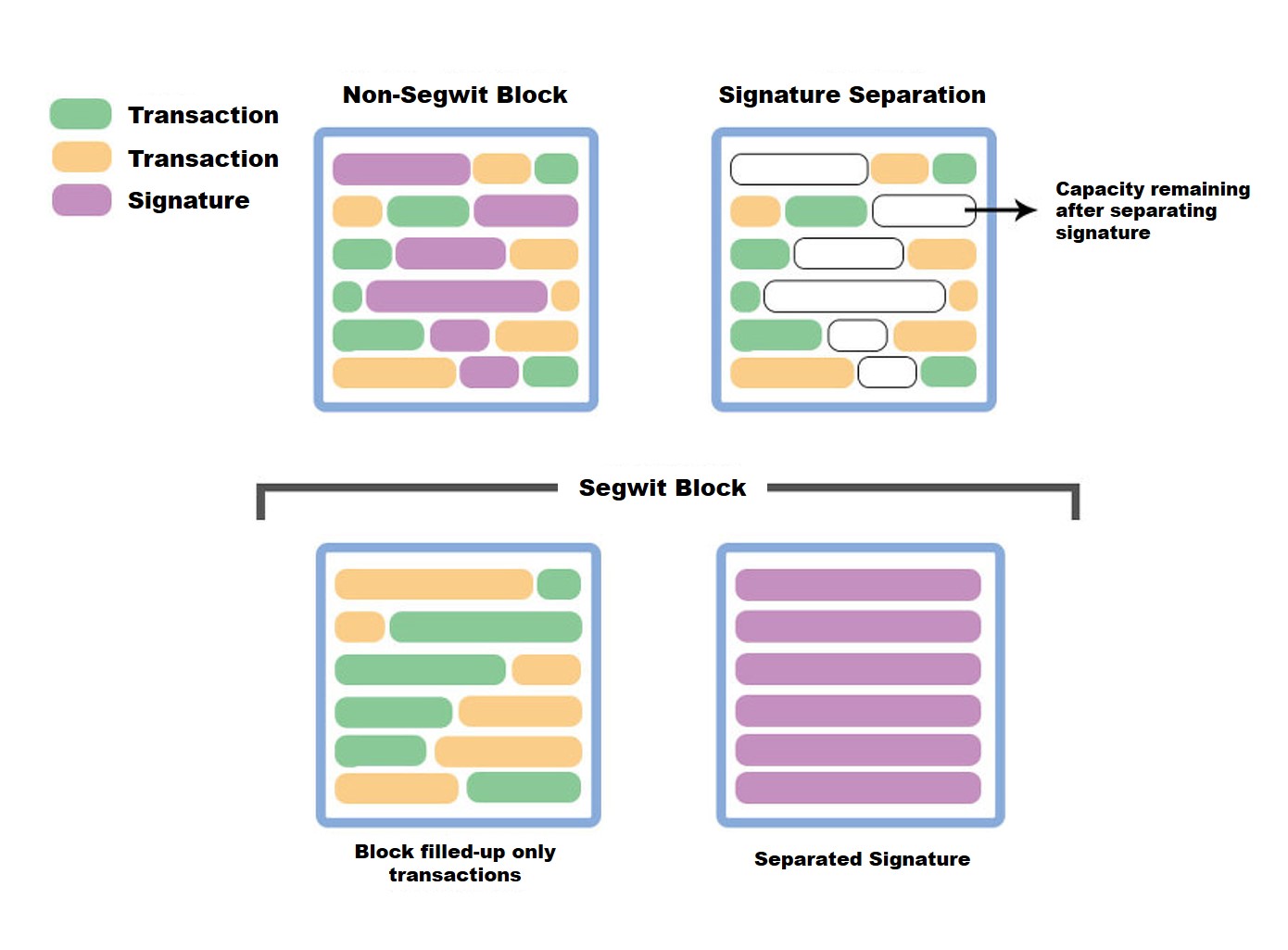
After adopting SegWit, major networks were able to shorten transaction processing times and lower transaction fees.